Auburn Office
Phenix City Office
Foley Office
Huntsville Office
Auburn
Phenix City
Foley
Huntsville
Best Stretches for Office Workers with Back Pain
If you spend most of your workday sitting at a desk, you are not alone. Millions of office workers experience back pain after hours of working at a computer. Long meetings, poor posture, limited movement, and repetitive tasks can all place extra stress on your spine and surrounding muscles.
The good news is that you do not need an intense workout to help your back feel better. A few simple stretches performed throughout the day can reduce stiffness, improve flexibility, and support better posture. When combined with healthy workplace habits and professional chiropractic care, these stretches can help you stay comfortable and productive.
In this guide, we will explain why office work often causes back pain, share some of the best stretches you can do during your workday, and discuss when it is time to seek professional care.
Why Office Workers Commonly Experience Back Pain
Your body is designed to move. Sitting in one position for several hours limits blood flow, shortens certain muscles, weakens others, and places continuous pressure on your spine.
Some of the most common reasons office workers develop back pain include:
- Sitting for long periods without standing
- Poor posture while working
- Slouching toward the computer screen
- Improper desk or chair height
- Weak core muscles
- Tight hips and hamstrings
- Lack of regular movement throughout the day
- Stress causing muscle tension
Many people also lean forward while typing or looking at a laptop. Over time, this posture places additional strain on the neck, shoulders, and
Can Stretching Really Help Back Pain?
In many cases, yes.
Stretching helps improve flexibility, reduce muscle tension, and restore normal movement around the spine. It also encourages better circulation, which helps deliver oxygen and nutrients to tired muscles.
Regular stretching may help:
- Reduce muscle tightness
- Improve posture
- Increase spinal mobility
- Decrease pressure on joints
- Improve flexibility
- Support better balance and coordination
- Reduce discomfort after sitting for long periods
Stretching works best when performed consistently. Even taking two or three minutes every hour to move your body can make a noticeable difference by the end of the day.
Before You Begin
A few simple guidelines can help you stretch safely.
- Move slowly without bouncing.
- Stretch until you feel gentle tension, not pain.
- Breathe normally throughout each movement.
- Hold each stretch for about 20 to 30 seconds unless otherwise noted.
- Repeat each stretch two or three times.
- Stop immediately if you experience sharp pain, numbness, or tingling.
If you have recently experienced an injury, surgery, or severe back pain, consult your healthcare provider before starting a stretching program.
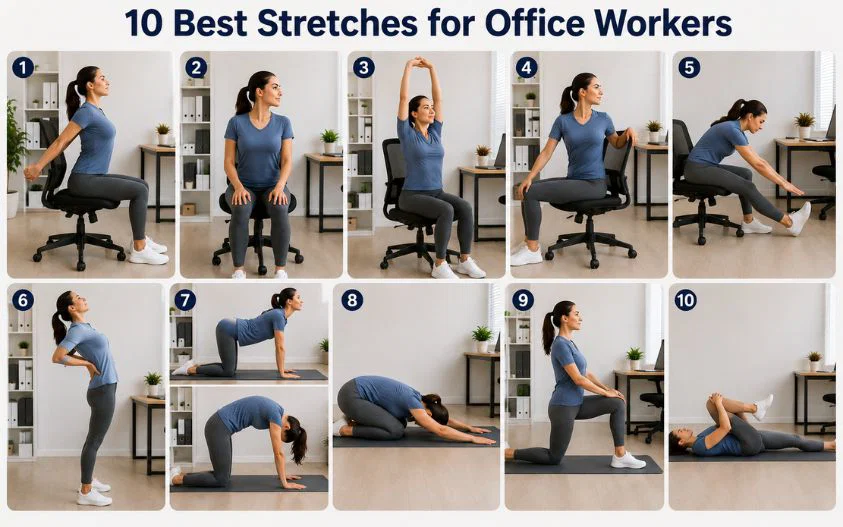
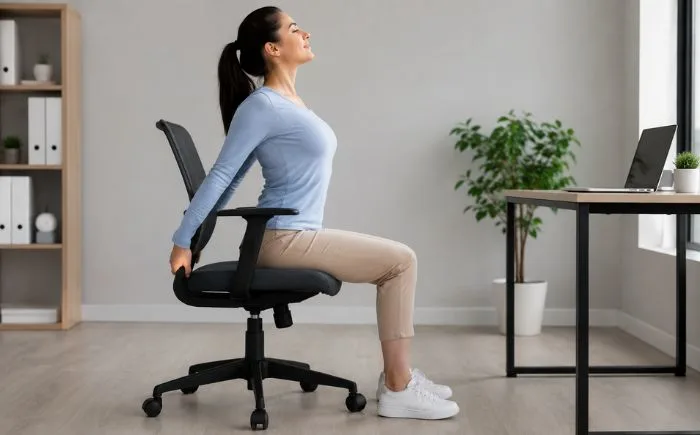
1. Seated Chest Opener
Long hours of typing often cause the shoulders to round forward. This stretch helps open the chest while encouraging better posture.
How to do it
- Sit near the front of your chair with both feet flat on the floor.
- Place your hands behind you by holding the sides or back of your chair.
- Gently pull your shoulders backward while lifting your chest.
- Hold the position for 20 to 30 seconds.
Benefits
- Opens the chest muscles
- Reduces rounded shoulder posture
- Improves upper back alignment
- Helps relieve neck and shoulder tension

2. Neck Rotation Stretch
Looking at a monitor all day often creates tightness in the neck that can spread into the upper back.
How to do it
- Sit tall with relaxed shoulders.
- Slowly turn your head to one side until you feel a gentle stretch.
- Hold for about 15 to 20 seconds.
- Return to the center and repeat on the opposite side.
Benefits
- Improves neck mobility
- Relieves stiffness
- Helps reduce upper back tension
- Encourages better posture
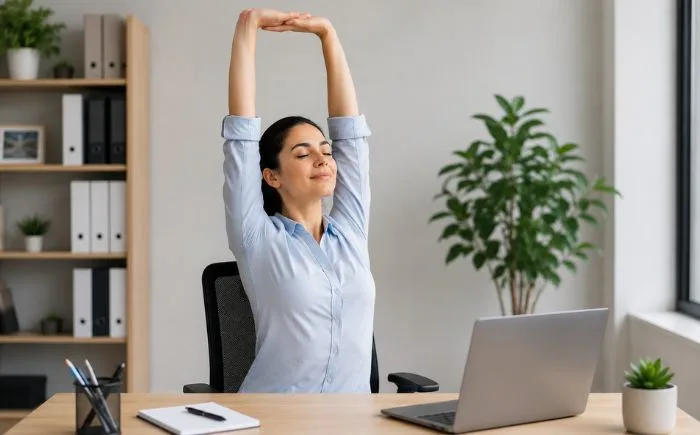
3. Overhead Reach Stretch
This simple stretch helps lengthen the spine after prolonged sitting.
How to do it
- Sit or stand with your back straight.
- Raise both arms overhead.
- Interlock your fingers and turn your palms upward.
- Reach gently toward the ceiling.
- Hold for 20 to 30 seconds.
Benefits
- Lengthens the spine
- Improves posture
- Reduces upper back stiffness
- Relieves compression from sitting
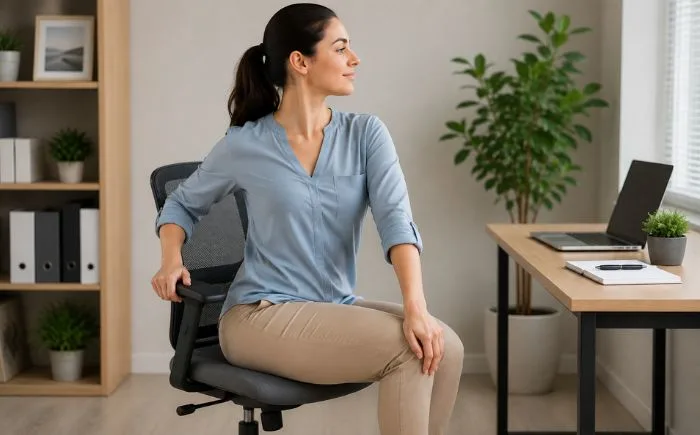
4. Seated Spinal Twist
Gentle spinal rotation helps improve mobility while reducing stiffness in the lower back.
How to do it
- Sit upright with both feet flat on the floor.
- Place one hand on the opposite knee.
- Slowly rotate your upper body toward that side./li>
- Hold for about 20 seconds.
- Repeat on the other side.
Benefits
- Improves spinal mobility
- Relieves lower back stiffness
- Encourages healthy movement throughout the spine
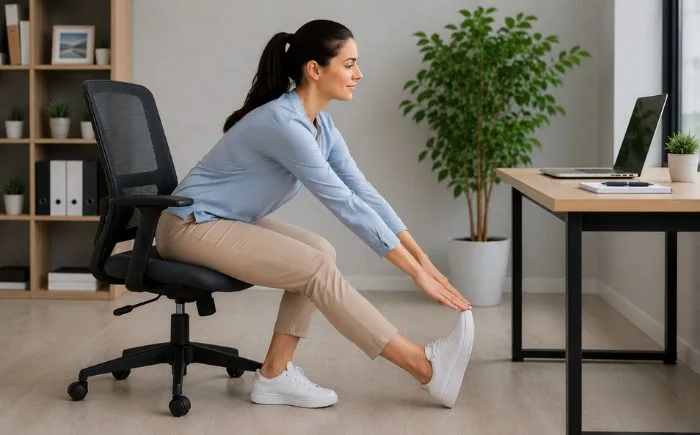
5. Seated Hamstring Stretch
Tight hamstrings often contribute to lower back discomfort because they affect pelvic movement.
How to do it
- Sit near the edge of your chair.
- Straighten one leg with your heel on the floor.
- Keep your back straight.
- Lean forward slightly from your hips until you feel a stretch behind your thigh.
- Hold for 30 seconds.
- Repeat with the opposite leg.
Benefits
- Improves hamstring flexibility
- Reduces stress on the lower back
- Supports healthier posture
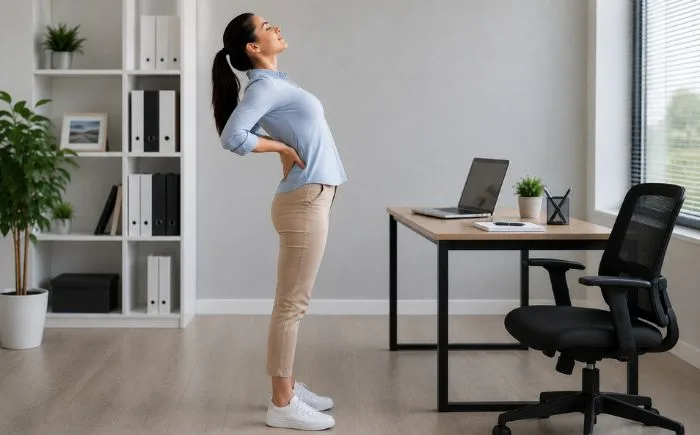
6. Standing Back Extension
If you spend most of your day sitting, this stretch can help reverse the forward bending posture.
How to do it
- Stand with your feet shoulder width apart.
- Place your hands on your lower back.
- Slowly lean backward while keeping your knees straight.
- Hold for five seconds.
- Repeat eight to ten times.
Benefits
- Reduces stiffness from prolonged sitting
- Encourages healthy spinal movement
- Helps improve standing posture
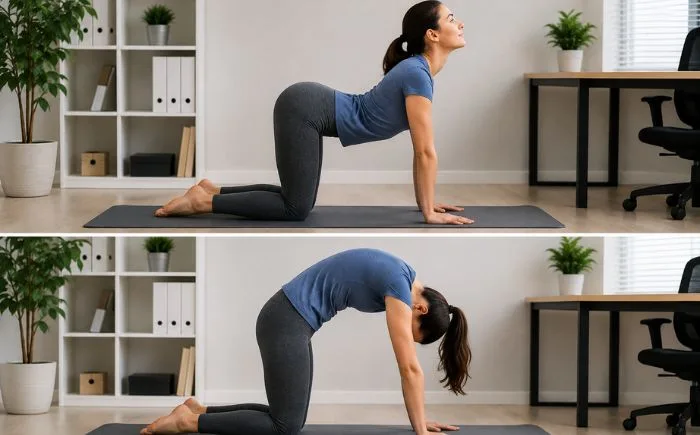
7. Cat Cow Stretch
If you have enough space during a break, this classic movement can improve spinal flexibility.
How to do it
- Start on your hands and knees.
- Arch your back toward the ceiling while tucking your chin.
- Slowly reverse the movement by lowering your stomach and lifting your head.
- Repeat ten times.
Benefits
- Improves spinal flexibility
- Reduces muscle tightness
- Promotes healthy movement throughout the spine
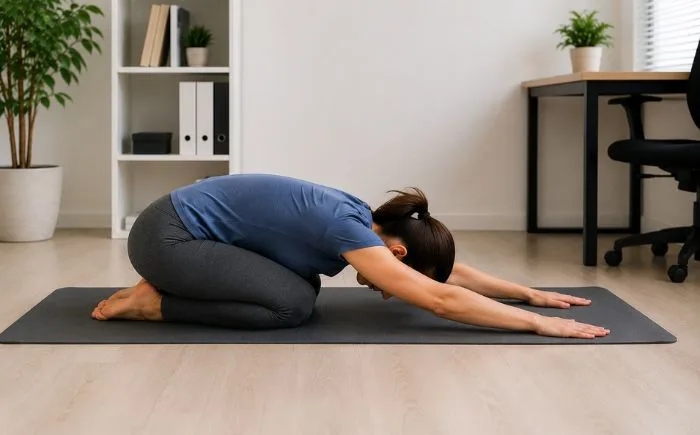
8. Child's Pose
This relaxing stretch gently lengthens the muscles along the back.
How to do it
- Kneel on the floor
- Sit your hips back toward your heels
- Reach your arms forward
- Allow your forehead to rest comfortably
- Hold for 30 seconds while breathing deeply
Benefits
- Gently stretches the lower back
- Relieves muscle tension
- Promotes relaxation
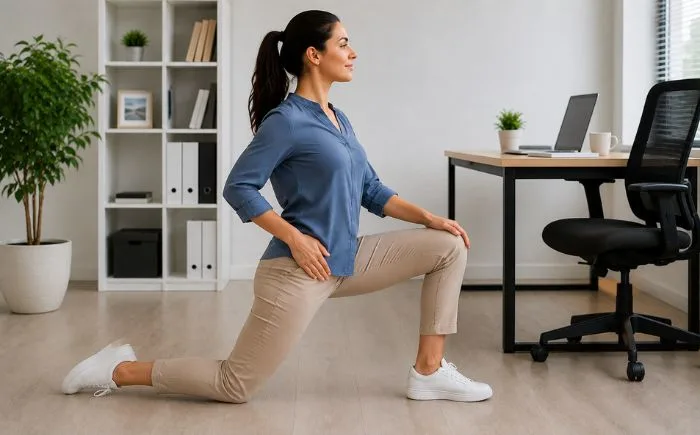
9. Hip Flexor Stretch
Sitting all day causes the muscles at the front of the hips to tighten, which may contribute to lower back discomfort.
How to do it
- Step one foot forward into a gentle lunge
- Keep your back leg extended
- Shift your weight forward until you feel a stretch in the front of your hip
- Hold for 20 to 30 seconds
- Repeat on the opposite side
Benefits
- Reduces hip tightness
- Improves pelvic mobility
- Supports lower back comfort
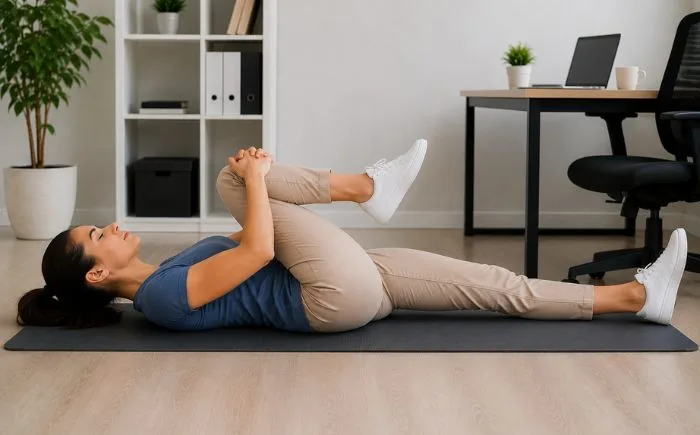
10. Knee to Chest Stretch
This stretch gently relaxes the muscles of the lower back.
How to do it
- Lie on your back
- Bend both knees
- Bring one knee toward your chest
- Hold it with both hands
- Hold for 20 to 30 seconds
- Repeat with the opposite leg
Benefits
- Relieves lower back tension
- Improves flexibility
- Encourages gentle spinal movement
Build Healthy Movement into Your Workday
Stretching is most effective when combined with healthy workplace habits.
Try these simple tips:
- Stand and walk for a few minutes every 30 to 60 minutes.
- Adjust your monitor so the top of the screen is at eye level.
- Keep both feet flat on the floor while sitting.
- Support your lower back with an ergonomic chair or lumbar cushion.
- Position your keyboard and mouse close to your body.
- Avoid crossing your legs for long periods.
- Stay hydrated throughout the day.
- Take walking breaks whenever possible.
Small changes repeated consistently often produce better long term results than occasional exercise sessions
How Chiropractic Care Can Help Office Workers with Back Pain
While stretching helps keep muscles flexible, it may not correct underlying joint restrictions, spinal dysfunction, or movement problems that contribute to recurring pain.
Chiropractic care focuses on improving spinal alignment, restoring joint mobility, and helping the nervous system function more efficiently.
Depending on your condition, your chiropractor may recommend:
- Gentle spinal adjustments
- Soft tissue therapy
- Posture evaluation
- Ergonomic recommendations
- Personalized stretching exercises
- Strengthening exercises
- Lifestyle modifications to reduce future strain
Many office workers notice improved mobility, reduced muscle tension, and better overall comfort when chiropractic care is combined with regular stretching and movement.
Final Thoughts
Back pain does not have to be an unavoidable part of working in an office. Making time for regular stretching, improving your workstation setup, and taking short movement breaks throughout the day can help reduce stiffness and support better spinal health. Consistency is the key. Small daily habits often lead to lasting improvements in comfort and mobility.
At Cornerstone Family Chiropractic, we understand the physical demands of modern office work. Our team provides personalized chiropractic care designed to identify the source of your discomfort, improve spinal function, and help you move with greater ease. Whether you are experiencing occasional stiffness or ongoing back pain, we are here to help you build a treatment plan that supports your long term health, comfort, and overall well-being.
FAQs
Aim to stretch every one to two hours during the workday. Even a few minutes of movement can help reduce stiffness from prolonged sitting.
Stretching cannot prevent every cause of back pain, but regular stretching, good posture, and frequent movement can significantly reduce your risk of developing muscle related discomfort.
Mild muscle soreness may occur when beginning a new routine. However, sharp pain or increasing symptoms are not normal and should be evaluated by a healthcare professional.
Many office workers benefit from chiropractic care because it addresses joint movement, posture, muscle tension, and spinal function while providing individualized recommendations to help prevent recurring discomfort.
Gentle stretching may help mild muscle tightness. If stretching increases your pain or causes numbness, tingling, or weakness, stop and seek professional medical advice.