Auburn Office
Phenix City Office
Foley Office
Huntsville Office
Auburn
Phenix City
Foley
Huntsville
How Chiropractic Care Help with TMJ Pain?
Jaw pain can make everyday activities feel uncomfortable. Eating, talking, yawning, and even smiling may become difficult when your jaw is not functioning properly. If you experience jaw clicking, stiffness, headaches, or facial discomfort, you may be dealing with a condition known as TMJ disorder.
Many people are surprised to learn that chiropractic care may help address some of the underlying factors contributing to TMJ pain. Since the jaw, neck, spine, and surrounding muscles work together, improving alignment and movement throughout the body may help reduce stress on the jaw joint.
In this article, we’ll explain what TMJ is, common symptoms and causes, and how chiropractic care may help support relief and improved function.
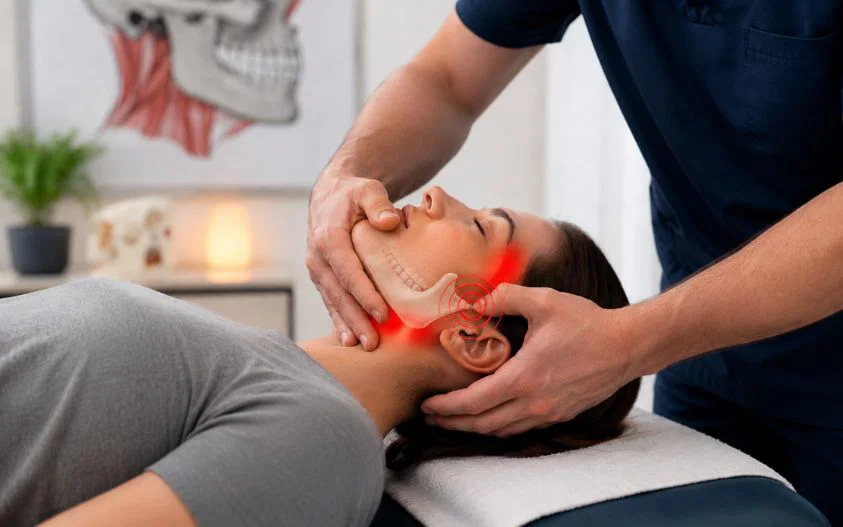
What Is TMJ?
TMJ stands for the temporomandibular joint. This joint connects your lower jaw to your skull and allows you to open and close your mouth, chew food, speak, and perform normal facial movements.
You have a temporomandibular joint on each side of your jaw, located just in front of your ears.
When these joints or the surrounding muscles become irritated or do not function properly, it can lead to a condition commonly referred to as TMJ disorder or TMD (temporomandibular disorder).
Common Symptoms of TMJ Disorder
TMJ symptoms can vary from person to person. Some individuals experience mild discomfort, while others struggle with ongoing pain that affects daily life.
Common signs of TMJ disorder include:
- Jaw pain or tenderness
- Clicking, popping, or grinding sounds when opening the mouth
- Difficulty chewing food comfortably
- Jaw stiffness or locking
- Facial pain
- Headaches or migraines
- Ear pain or a feeling of fullness in the ears
- Neck and shoulder tension
- Limited jaw movement
These symptoms can come and go or gradually worsen over time if the underlying issue is not addressed.
What Causes TMJ Pain?
TMJ pain can develop for several reasons. In many cases, multiple factors contribute to the problem.
Some common causes include:
Teeth Grinding and Clenching: Grinding your teeth during sleep or clenching your jaw throughout the day places excessive pressure on the jaw joint and surrounding muscles.
Stress and Muscle Tension: Stress often causes people to tighten their jaw muscles without realizing it. Over time, this constant tension can contribute to discomfort and joint irritation.
Poor Posture: Many people spend hours looking down at phones, tablets, or computers. Poor posture can affect the alignment of the neck and upper spine, which may influence jaw mechanics.
Injury or Trauma: A car accident, sports injury, fall, or direct blow to the jaw can affect how the joint moves and functions.
Joint Dysfunction: Wear and tear, inflammation, arthritis, or structural issues within the joint itself can also contribute to TMJ symptoms.
The Connection Between the Jaw, Neck, and Spine
One of the most important things to understand about TMJ pain is that the jaw does not work alone.
The muscles, joints, and nerves that influence jaw movement are closely connected to the neck and upper spine.
When the neck loses proper movement or alignment, the muscles around the jaw often compensate. This added strain can contribute to tension, restricted motion, and discomfort.
For example, forward head posture places extra stress on the muscles that support both the neck and jaw. Over time, this can affect how the jaw opens, closes, and functions.
Because of this relationship, addressing only the jaw may not always provide lasting relief.
How Can Chiropractic Care Help with TMJ Pain?
Chiropractic care focuses on improving joint function, restoring movement, and supporting the body’s natural ability to heal.
While every patient is different, chiropractic treatment may help reduce some of the mechanical stresses contributing to TMJ discomfort.
Improving Joint Mobility
Restricted movement in the neck, upper back, or jaw can increase strain on surrounding muscles and tissues.
Chiropractic adjustments may help restore normal motion in these areas, allowing the body to move more efficiently.
Reducing Muscle Tension
Tight muscles around the jaw, neck, and shoulders often play a major role in TMJ symptoms.
By improving joint movement and reducing stress on the nervous system, chiropractic care may help relax overworked muscles and reduce tension.
Supporting Better Posture
Poor posture is a common contributor to both neck pain and TMJ dysfunction.
Many chiropractors evaluate posture as part of a comprehensive examination. Improving spinal alignment and posture habits may reduce unnecessary stress on the jaw.
Addressing Neck Dysfunction
The upper cervical spine has a strong relationship with jaw mechanics.
When the neck is functioning properly, the muscles and nerves that influence jaw movement often function more efficiently as well.
Encouraging Whole Body Function
Rather than focusing only on the site of pain, chiropractic care looks at how different areas of the body work together.
This whole body approach may help identify contributing factors that could otherwise be overlooked.
What to Expect During a Chiropractic Evaluation for TMJ
If you visit a chiropractor for TMJ concerns, the first step is a thorough evaluation.
This may include:
- Reviewing your symptoms and health history
- Examining jaw movement
- Evaluating posture
- Assessing neck and spinal mobility
- Checking muscle tension in the jaw, neck, and shoulders
- Discussing daily habits that may contribute to symptoms
Based on the findings, your chiropractor can determine whether chiropractic care may be appropriate for your condition.
If necessary, they may also recommend working alongside other healthcare providers such as dentists or specialists.
Is Chiropractic Care Safe for TMJ?
For many individuals, chiropractic care is considered a safe and conservative approach to musculoskeletal conditions.
Treatment plans are customized based on each person’s needs, symptoms, and health history.
Before beginning care, your chiropractor will perform an evaluation to determine the most appropriate approach for your situation.
If there are signs that another type of treatment is needed, they can guide you toward the appropriate healthcare professional.
When Should You Seek Help for TMJ Pain?
Occasional jaw discomfort may resolve on its own, but persistent symptoms should not be ignored.
Consider seeking professional evaluation if you experience:
- Frequent jaw pain
- Recurring headaches
- Difficulty chewing
- Jaw locking
- Persistent clicking or popping
- Chronic neck and shoulder tension
- Symptoms that interfere with daily activities
Early intervention may help prevent symptoms from becoming more severe over time.
Final Thoughts
TMJ pain can affect much more than your jaw. It can influence how you eat, sleep, speak, and go about your daily routine. Because the jaw, neck, muscles, and spine are closely connected, addressing the entire musculoskeletal system may help improve comfort and function.
At Cornerstone Family Chiropractic, we take a whole body approach to health and wellness. Through personalized chiropractic care, our team works to identify potential contributors to discomfort and help patients move, feel, and function at their best. If jaw pain, headaches, neck tension, or TMJ symptoms are affecting your quality of life, a chiropractic evaluation may be a valuable step toward finding relief.